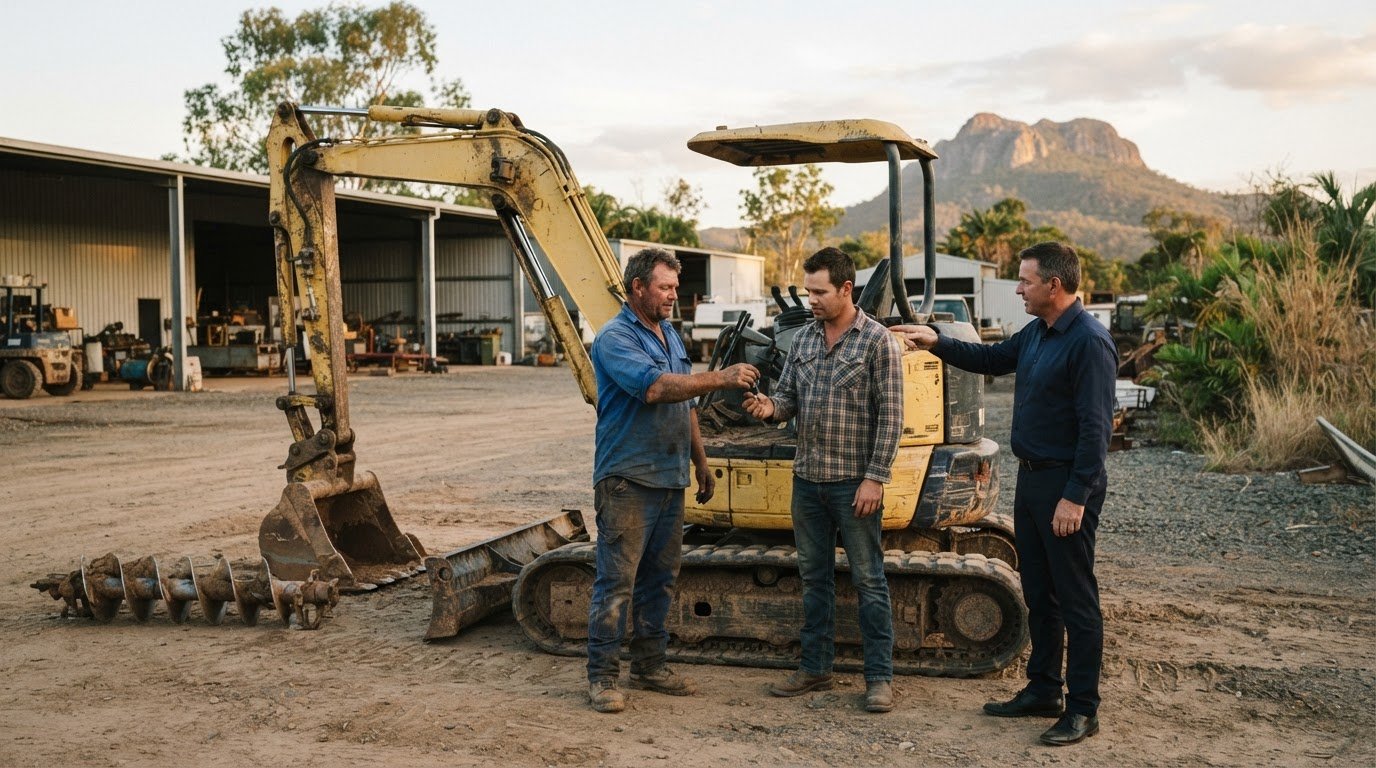
For a Rockhampton business owner, selling or otherwise disposing of an asset can create a capital gain or loss. Capital losses can reduce capital gains, and unused losses can be carried forward indefinitely to offset future gains. Capital gains tax on business assets is part of income tax, not a separate tax.
Whether you’re selling equipment, commercial premises or a business, tax questions can add complexity to an already busy transition. It helps to understand how a loss affects a gain and whether a concession could change the outcome.
This guide explains how gains and losses are worked out, how capital losses are applied, and which small business CGT concessions may be relevant. It also outlines key eligibility considerations and what to keep in mind when a sale is part of your business plans.
Key Takeaways
- Understand how a business asset disposal can create a capital gain or loss, and how losses may affect future gains.
- See which small business concessions could reduce or defer a gain, and what eligibility factors matter.
- Learn why an asset’s use in the business can affect access to concessions.
- Find out how selling a business can raise different tax considerations from disposing of individual assets.
- Identify when tax advice can help you plan an asset sale or business transition with greater clarity.
What are the tax implications when a business is sold?
Selling a business can trigger capital gains tax when a CGT event affects its assets. The outcome depends on which assets are sold, how they were used and whether any concessions apply.
A sale may involve several assets, each with its own tax treatment. Commercial premises, goodwill and equipment can have different cost bases and disposal proceeds. A gain generally arises when proceeds exceed an asset’s cost base; a loss may arise when proceeds are lower. How the sale agreement allocates value across assets can therefore affect the calculation and available concessions.
Some assets follow different rules. Depreciating equipment is generally outside CGT unless it was used partly for private or other non-taxable purposes. Selling a home used as a business office can also raise a CGT issue for the business-use portion. Consider each asset separately rather than treating the whole sale as one tax calculation.
Retirement exemption requirements and limits
The small business retirement exemption can disregard an eligible capital gain, subject to a lifetime limit and contribution rules. According to the Australian Taxation Office, an Australian small business owner may exempt capital gains from selling a business asset up to a lifetime limit of A$500,000.
An owner under 55 must pay the exempt amount into a complying superannuation fund or retirement savings account. The small business rollover instead lets an owner defer all or part of a gain for two years, or longer in specified circumstances. A deferred gain may become assessable if circumstances change, such as failing to acquire a replacement asset within the required time or later selling it.
Eligibility for the 15-year exemption
The 15-year exemption may disregard a gain when the business has owned the asset continuously for at least 15 years and the owner is 55 years or over, retiring or permanently incapacitated. The age, ownership period and retirement or incapacity conditions all matter. If the owner misses one condition, this particular exemption may not apply, although another small business concession could still be relevant.
An exemption can make a substantial difference to the proceeds available after a sale. Check the ownership history and the owner’s circumstances against the requirements before relying on it. A business sale involving company shares or a trust interest can also bring additional eligibility conditions.
Common CGT risks when disposing of assets
Common mistakes include overlooking an asset, misallocating sale proceeds or assuming every business asset qualifies for a concession. A capital loss must be applied before the general discount and active asset reduction. A deferred rollover gain can also return to the calculation when a replacement asset is sold or another specified change occurs.
Main residence and personal-use rules need separate attention. A home used partly for business may attract CGT when sold, while personal-use assets under A$10,000 are generally exempt. Certain collectibles bought for A$500 or less are generally exempt. Treating an office area as entirely private, or applying a personal-use exemption to a business asset, can produce an incorrect result.
What other CGT concessions are available, and what are the eligibility criteria?
Small business CGT concessions can reduce or defer gains on qualifying active assets. Eligibility depends on the business, the asset’s use and, in some cases, its ownership structure.
The 15-year exemption can disregard an eligible gain when its ownership and retirement conditions are met; the 50% active asset reduction cuts a qualifying gain by half. The reduction may also be applied with the general CGT discount, retirement exemption or small business rollover.
Active asset requirements
An active asset is generally one used to run a business, rather than held mainly as a passive investment. This distinction matters because business use is central to the active asset requirement for small business concessions.
For example, premises used in daily business operations may be treated differently from an investment property leased to another business. Company shares and trust interests can involve extra conditions, as can a CGT event connected with a partnership. Keep records showing the asset’s ownership, business use and any changes in use over time.
The 50% active asset reduction
The small business active asset reduction can reduce a capital gain from a qualifying active asset by 50%. It can make a difference when selling business premises, goodwill or another eligible asset, but the asset and taxpayer must meet the applicable conditions.
Eligibility pathways include aggregated turnover under A$2 million or meeting the maximum net asset test, which broadly requires net CGT assets below A$6 million. Following changes announced in the 2026-27 Federal Budget, the turnover threshold for the 50% active asset reduction is stated as A$10 million. The active asset requirement still matters.
The 15-year exemption and the 50% reduction work differently: one can disregard a qualifying gain, while the other reduces it. The concessions operate within eligibility rules, so a business sale involving shares or trust interests needs careful assessment.
Keep purchase and sale contracts, invoices for acquisition and improvement costs, asset registers, depreciation schedules and documents showing business use. Retain records of ownership changes, sale proceeds and capital losses as well. Together, these documents help establish the cost base, disposal proceeds and whether an asset meets active-use conditions.
A practical review links records to each asset and concession, rather than treating a business sale as one calculation. Business Wise’s accounting and advisory services can help map eligibility tests and supporting records before a sale is finalised.
Small business CGT concessions
Australia’s small business CGT concessions can reduce or defer a capital gain when a business sells qualifying assets. Which concessions may apply depends on the asset, the business structure and each eligibility test.
Concessions for business sales
Four concessions may apply to eligible small business gains: the 15-year exemption, 50% active asset reduction, retirement exemption and small business rollover. Each works differently, so a sale involving premises, goodwill and shares may need separate treatment for each asset.
For a company or trust, the ownership structure can affect eligibility. A sale of shares or a trust interest may involve additional conditions, while a partnership-related CGT event can raise separate tests. Identify the seller and the asset before calculating proceeds to establish which rules apply.
Applying multiple concessions
More than one concession may apply to a capital gain, but the calculation follows an order. First apply capital losses, then consider the general CGT discount and active asset reduction. The retirement exemption or rollover may then address some or all of the remaining eligible gain.
For example, a qualifying individual may use the general CGT discount and active asset reduction together, then consider retirement exemption or rollover relief. These concessions don’t apply automatically just because a business is being sold. Each eligibility requirement and the owner’s chosen treatment matter.
Trusts require particular care because the trust’s eligibility and the beneficiary’s position can both affect the outcome. A trust may have an eligible active asset, but that alone doesn’t establish that every concession is available to each beneficiary. Sale documents, asset history and distribution arrangements help explain how the gain flows through.
Keep the CGT calculation distinct from GST. Australia’s GST is 10% on most goods and services, while a business sale may be treated as a going concern only when the relevant conditions are met. The agreement should clearly identify the transaction and its GST treatment; a going-concern label alone does not establish eligibility.
Review the sale structure before signing, especially if the agreement combines assets, shares and ongoing business operations. A careful assessment links each asset’s cost base and proceeds with the relevant concession, then considers GST treatment separately. This helps prevent a GST assumption from being mistaken for a CGT outcome.
Capital gains and losses on business asset disposals
For an Australian business, a capital gain or loss is generally the difference between an asset’s cost and the amount received on disposal. The calculation matters when an asset is sold, given away, lost or destroyed.
Calculating a capital gain
A capital gain is generally the amount received for an asset minus its cost, adjusted for relevant costs included in the calculation. This establishes the gain or loss before eligible concessions are applied.
Start with the proceeds from the sale or other disposal, then compare them with the asset’s cost base. If sale proceeds exceed the cost base, the difference is generally a capital gain. If proceeds are lower, the result may be a capital loss.
Australian CGT is part of income tax, not a separate tax. A disposal in a financial year can therefore affect that year’s income tax calculation. The date and circumstances of the CGT event matter, including whether the asset was sold, transferred, lost or destroyed.
Not every business asset is treated the same way. Depreciating equipment is generally exempt from CGT unless it was used for private or another non-taxable purpose. Distinguish such equipment from assets that may produce a capital gain, such as commercial premises or goodwill.
Using capital losses to offset gains
A capital loss can reduce a capital gain, lowering the net capital gain included in the calculation. This matters when separate disposals in the same financial year produce both gains and losses.
For example, Tracey’s capital gain is A$120,000 and her separate capital loss is A$4,000. Applying the loss leaves a net capital gain of A$116,000 before relevant discounts or concessions. Australian capital losses that aren’t used can be carried forward indefinitely to offset future capital gains.
Capital losses are applied before the general CGT discount and small business active asset reduction. This order affects the amount to which those concessions apply. Match a loss against capital gains rather than treating it as a direct reduction to business income.
Keep the calculation asset by asset. A business sale can include premises, goodwill and equipment, each with different proceeds, costs and tax treatment. Combining all the amounts into one figure can hide a gain on one asset and a loss on another.
For each disposal, record the CGT event, relevant financial year, proceeds and cost details. Then identify any capital loss available from another disposal and apply it before eligible discounts or concessions. This sequence helps explain how the final net capital gain was reached.
Capital gains on business assets
In Australia, a business can make a capital gain or loss when an asset is sold, given away, lost or destroyed. Capital gains tax on business assets is part of income tax, so the asset’s classification and the circumstances of its disposal shape the result. Commercial premises, goodwill and some business interests can produce gains, while particular assets may follow different rules.
Which business assets are subject to capital gains tax in Australia? A CGT event can affect assets such as commercial premises, goodwill and shares, depending on the disposal and ownership circumstances. Business equipment may be treated differently if it is a depreciating asset, so identify each asset separately rather than assuming one rule covers the entire sale.
Asset use matters. An item used to run the business may qualify as an active asset for small business concessions, while an asset held mainly as an investment may not meet that requirement. For example, premises used by the business and premises leased to another operator may have different eligibility considerations, even if both are sold in the same transaction.
Some business equipment is generally exempt from CGT when it is a depreciating asset. An exception can apply if the equipment is used for private or another non-taxable purpose. For example, if a vehicle is used partly for business and partly privately, consider its use rather than treating it automatically as wholly business-related.
The general CGT discount can also affect the amount included in a gain calculation. According to the Australian Taxation Office, individuals and trusts may generally discount an eligible capital gain by 50% if they have held the asset for more than 12 months. Companies aren’t eligible for the general CGT discount, so the entity that owns the asset matters.
Consider a sale involving a company’s premises, goodwill and equipment. The premises or goodwill may create a capital gain, while depreciating equipment may be treated differently. If the seller is a company, the general discount does not apply. If an individual or trust owns an eligible asset, the holding period and other conditions matter. The contract’s asset allocation helps distinguish each item and its proceeds.
Keep sale agreements, acquisition records, improvement invoices and asset-use records together. These documents support the cost base, proceeds, ownership and use considered in the calculation. They also help establish whether an asset was held by an individual, trust or company, a distinction that can change which discount or concession applies.
Before finalising a disposal, map each asset to its owner, use and relevant CGT treatment. An asset-by-asset review helps separate CGT questions from depreciation and income tax treatment, and may identify where a small business concession applies.
Business Wise
As a friendly, family-owned firm, Business Wise understands the care and effort that go into building a small business. Its Business Accounting and Advisory and Tax Advisory services can help you consider the tax implications of a sale or asset disposal alongside your wider business plans.
It can be useful to discuss your options while planning a transition or preparing tax information after a disposal. Business Wise can help bring the financial details into focus so you can make informed decisions about your next stage.
For a practical conversation about your business transition, contact Business Wise in Rockhampton.
Plan your next business move with confidence
A sale or asset disposal can form part of a bigger decision about your business and your future. Build tax planning into that decision early, so the financial implications can inform your timing, structure and transition plans rather than becoming an afterthought. Planning for capital gains tax on business assets is one part of making a considered move.
Business Wise can connect these decisions with your wider business position through Business Accounting and Advisory and Tax Advisory. Bookkeeping & BAS Services can also support clear, well-organised financial records for the discussion. The aim is practical guidance to help you understand your options and plan the next stage of your business journey.
Take the next step when you’re ready. Contact Business Wise about your tax and start a conversation about your business plans. With thoughtful preparation, you can move forward with greater clarity and focus on the future you’re working towards.
Frequently Asked Questions
Can capital losses be used to reduce tax?
Capital losses can reduce capital gains, but they don’t directly reduce ordinary business income. This distinction matters when preparing business accounts: a loss on an asset disposal belongs in the capital gains calculation, not as a routine operating expense. Keep supporting records with your tax information so the loss can be matched to the correct capital gain and reported in the right context.
What if I make a capital loss?
A capital loss can be used against capital gains, and any unused amount can be carried forward to offset future gains. For example, if an asset disposal produces a loss but there are no gains to offset in that period, retain records of the loss for a future calculation. Keep contracts, invoices and other documents showing how the loss arose.
What if I transfer property instead of selling it?
A property transfer can have CGT consequences even if no money changes hands. The transfer’s purpose, recipient and ownership details help determine how the event is treated. For example, moving a business property into another ownership structure differs from simply changing how the property is used. Keep transfer documents and dates with the original acquisition records.
What is a CGT event?
A CGT event is an occurrence that can affect an asset’s tax position. It may arise through a transaction or another change involving ownership or the asset itself. Identifying the event helps establish which records and reporting period are relevant. Business paperwork may include a sale contract, transfer document, insurance record or evidence that an asset was destroyed.
What is capital gains tax?
Capital gains tax is the Australian income-tax treatment that applies when certain events involving assets produce a capital gain. It isn’t a separate tax bill calculated independently from income tax. For a business owner, the practical task is to identify the relevant asset event and work out its tax result alongside other income tax information for the same reporting period.
What is the CGT discount?
The CGT discount reduces an eligible capital gain included in a taxpayer’s calculation. It changes the amount of the gain considered, rather than acting as a tax credit or refund. Whether it applies depends on factors such as who owns the asset and whether it meets the relevant conditions. It may also apply alongside eligible small business concessions.
How does Australian CGT apply to business assets?
Australian CGT treatment depends on the asset and the event affecting it. A sale contract, transfer or insurance claim can provide different evidence of what happened and when. Separate records for each asset help distinguish a disposal from ordinary business trading. This is especially useful when one transaction includes several types of property, each with its own acquisition and use history.
What are the Australian CGT discount rules for business assets?
The discount isn’t a blanket exemption for business assets, and it doesn’t apply simply because an asset belongs to a business. The asset’s eligibility and its owner’s legal structure affect whether the discount can be used. Companies, individuals and trusts can have different CGT treatment, so identify the asset owner before including a discount in the calculation.

Disclaimer
“The information on this website is general in nature and is provided for information purposes only. It is not legal, financial or professional advice. You should obtain specific, independent advice relevant to your circumstances.”
You must be logged in to post a comment.